1 To Watch
The cost of control: Amman risks the stability it aims to protect
Crackdowns on political opposition and public dissent are increasing the risk of instability in Jordan
May 22, 2025


China-GCC and UAE-EU trade talks highlight Gulf hedging strategy and Turkiye expands its economic and security footprint in Somalia.
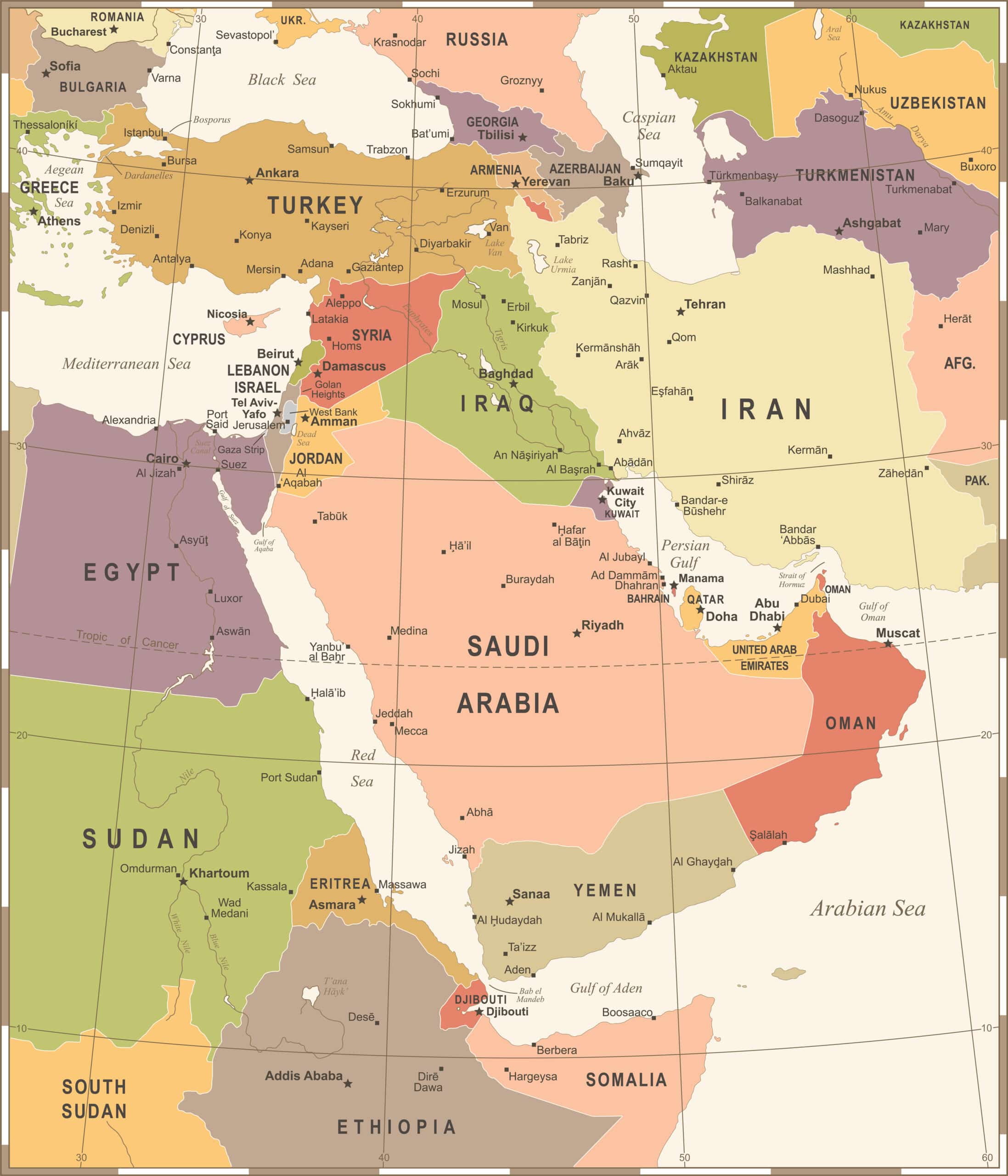
China has stepped up its call for a long-delayed China-GCC free trade agreement (FTA) to be finalised. During a regional visit earlier this month, Foreign Minister Wang Yi urged Gulf leaders in Riyadh to “seal” negotiations that have been running for more than two decades. China’s pitch is pro-free trade, anti-protectionism, and supportive of the GCC’s desire to strengthen its strategic independence, positioning Beijing as a stable economic partner at a time of wider tariff and sanctions turbulence.
In parallel, the UAE is accelerating a separate trade track with Europe. UAE-EU FTA talks are moving quickly, with the fourth negotiating round held in the UAE in the week of 11 December 2025, and a fifth round planned for early 2026. The agenda spans goods and services, investment and cooperation in areas such as renewables, green hydrogen and critical raw materials.
This twin-track activity is best understood as hedging rather than choosing. The China-GCC push and the UAE-EU negotiations are complementary elements of Gulf geo-economic risk management – expanding market access and creating optionality if US, EU and China economic fragmentation deepens. Overlapping trade tracks reduce exposure to any single demand centre, currency zone or regulatory regime, while also strengthening leverage across all of them.
At the GCC level, a China-GCC FTA would deepen eastward trade integration and reinforce the region’s ambition – and potential – to become a global trade and logistics hub. Total GCC-China trade was roughly $257bn in 2024 and Asia House forecasts this will reach $375bn by 2028, due to structural growth in energy, industrial supply chains and re-export dynamics. An FTA would not only drive that increase; it could also act as an accelerator by lowering tariffs, tightening rules of origin and improving predictability for services and investment.
These measures would likely support exports of petrochemicals, metals and downstream industrial products from the GCC, while facilitating greater inflows of Chinese manufactured goods and construction services. Politically, such an agreement would align with GCC narratives around strategic autonomy and multi-alignment, without implying a broader security realignment. The GCC already has effective FTAs with Singapore and the European Free Trade Association countries (Iceland, Liechtenstein, Norway and Switzerland) and signed an agreement with South Korea in 2023. It recently concluded talks with New Zealand (2024) and is in negotiations with Australia, Japan, Malaysia, Turkey and the UK.
The UAE’s EU track builds on a deliberately independent trade agenda that runs alongside, rather than through, the GCC. Since 2021, Abu Dhabi has pursued bilateral Comprehensive Economic Partnership Agreements (CEPAs) at speed with partners across Asia, the Middle East, Africa and Latin America in a bid to use trade in non-oil goods to spur economic growth. This reflects frustration with the slower pace of consensus-based GCC trade policymaking and enables faster progress on services, investment and regulatory cooperation.
A UAE-EU FTA would sit atop an already dense CEPA network, strengthening the country’s hedge through preferential access via bilateral deals, potential high-level access to the EU, and continued upside from any eventual China-GCC agreement. EU-UAE flows are already substantial, with the two parties recording $67.6bn in non-oil trade in 2024. The EU is the UAE’s second-largest trading partner, accounting for 8.3% of the UAE’s total non-oil trade.
From a European and corporate perspective, the implications are mixed. An FTA with the UAE would enhance EU access to a highly connected regional hub and support supply chain resilience in energy transition-related inputs. At the same time, firms operating across China-linked and EU-linked trade regimes may face rising compliance complexity if standards, sustainability provisions, data rules and origin thresholds continue to diverge.
These parallel negotiations form part of a deliberate UAE strategy to position itself as a neutral commercial platform that can operate across both China-facing and EU-facing trade, despite widening regulatory and political divergence. The success of that strategy, however, will hinge on whether persistent negotiation frictions can be managed rather than eliminated.
On the China-GCC track, the main obstacles are well established. Talks have repeatedly slowed over tariff treatment for Gulf petrochemicals and related downstream products, an area where Chinese domestic producers have sought protection. Services liberalisation and investment disciplines have also proven difficult, reflecting differences in regulatory models and state involvement in key sectors.
Recent Chinese signalling that conditions are “basically mature” should therefore be read as political encouragement rather than confirmation that these structural issues have been resolved. The probability of a near-term breakthrough is higher than in previous years, given China’s interest in presenting itself as a champion of trade openness and the GCC’s desire to diversify demand centres, but any agreement is likely to rely on carve-outs and phased implementation rather than full liberalisation from the outset.
On the UAE-EU track, the tensions are less about market access and more about standards. The EU’s modern trade agreements embed sustainability, labour and environmental provisions, while European institutions and civil society continue to push for stronger conditionality in external economic relationships. At the same time, Gulf states, including the UAE, have expressed concern over the extraterritorial impact of EU sustainability rules, and the compliance burden they place on exporters and investors, as reported in last week’s Bulletin. The bilateral format gives both sides more flexibility than a bloc-level negotiation, but alignment on the scope and enforceability of sustainability provisions remains a central test. Recent softening in parts of the EU’s corporate sustainability framework suggests some room for compromise, yet values-based conditionality is likely to remain a feature – and a stumbling block.
Ankara is set to begin exploratory drilling for oil and gas in Somalia in 2026 – marking its first concrete move into the country’s largely untapped hydrocarbon sector and a step that stands to deepen its strategic footprint in the Horn of Africa.
In December, Turkish Energy Minister Alparslan Bayraktar confirmed that Turkiye is preparing to launch drilling operations in three offshore blocks and additional onshore areas in Somalia, following the completion of extensive seismic surveys by the state-owned Turkish Petroleum Corporation (TPAO). According to media reports, commercially viable reserves in two of the three offshore blocks are estimated at around 20 billion barrels of crude.
This follows a series of bilateral agreements signed between Ankara and Mogadishu in 2024 and 2025 that span defence cooperation, maritime security and hydrocarbon exploration. The agreements indicate a change in Turkiye’s engagement with Somalia – shifting from humanitarian assistance and security cooperation initiated in 2011 towards a more integrated, long-term strategic and economic partnership centred on energy, infrastructure and security.
Ankara’s push into Somalia’s energy sector fits within a broader effort to diversify Turkiye’s oil and gas supplies and strengthen its energy security. Turkiye remains highly dependent on imported hydrocarbons; domestic oil production meets only a fraction of its consumption, with less than 10% of petroleum demand covered by local output in 2022. Alongside efforts to position itself as a regional gas hub through pipelines, liquefied natural gas capacity and trading infrastructure, the country has pursued bilateral energy diplomacy across Africa, particularly in the North and West, including in Libya, Senegal and Niger.
Somalia represents a significant eastward extension of this approach. Although its reserves remain unproven, estimates suggest the country could hold several billion cubic metres of natural gas and up to 30 billion barrels of oil. This makes it a high-potential – but high-risk – frontier for Turkiye’s expanding energy ambitions.
The agreed terms reflect this risk. Under a hydrocarbon agreement signed in 2024, Turkiye is entitled to recover up to 90% of annual output as “cost petroleum” before profits are shared – a level widely regarded as above international norms. Somalia receives a 5% revenue share, payable only if oil is discovered and commercially extracted. The agreement also grants Turkiye full export rights and allows earnings to be retained abroad as well as the transfer of interests to third parties without local oversight or presence.
The favourable terms have prompted widespread concern that the agreement risks infringing on the country’s sovereignty and constraining future policy autonomy. From Ankara’s perspective, however, they are appropriate given Somalia’s high-risk operating environment, which is characterised by unproven reserves, persistent security threats, including from the Islamist group Al-Shaabab, and weak regulatory capacity.
Since 2020, Mogadishu has taken several steps towards developing an energy industry open to international players. It has passed a Petroleum Law, established the Somali Petroleum Authority to oversee the sector and agreed a resource-sharing deal with federal member states to clarify how revenues will be distributed. However, Mogadishu’s ability to oversee such arrangements and enforce transparency is not yet proven. The Somali government has defended the deal with Turkiye as a pragmatic necessity, arguing that after decades of civil war, institutional demise and investor deterrence, highly favourable terms were required to attract a partner willing to absorb the risks of exploration.
Turkiye has positioned itself as such a partner, combining a high tolerance for risk with a long-term strategic interest in Somalia’s stability and economic development. Over the past decade, bilateral relations have evolved from humanitarian assistance and soft-power outreach into a multi-faceted strategic partnership. Somalia hosts Turkey’s largest overseas military base, TURKSOM, which trains Somali National Army (SNA) forces and has supported the development of elite units to combat Al-Shabaab. Turkish defence firm Baykar has also supplied TB2 drones in support of counter-terrorism operations. Mogadishu’s air and seaports are managed by Turkish companies and Ankara has secured parliamentary approval to deploy naval assets in support of Somalia’s maritime security and amid rising insecurity in the Red Sea linked to attacks by Iran-backed Houthi militants.
Turkiye’s approach to Somalia is driven as much by geopolitics as by commercial considerations. Turkish policymakers and analysts increasingly view the country as a testing ground for advancing economic interests and projecting influence across the Horn of Africa – a region regarded as strategically important due to its resource potential and its location along key maritime corridors linking the Red Sea and the Indian Ocean. This reflects a wider shift in Turkey’s Africa policy towards bilateral, interest-driven partnerships that combine defence cooperation with access to strategic sectors such as energy and mining, a pattern also evident in Ankara’s outreach to countries including Niger and Algeria.
Its growing presence in Somalia and the region intersects with wider competition in the Horn, where Gulf states, Russia, China, Iran and Western actors have also invested heavily in security partnerships, political influence, ports and infrastructure.
One of Turkiye’s most significant competitors is the UAE. Ankara and Abu Dhabi have moved from overt rivalry in Somalia to a form of “competitive coexistence” in recent years.
Turkey seeks influence primarily by strengthening the federal state in Mogadishu through security assistance and operation of national infrastructure. The UAE seeks influence primarily by building and controlling logistics nodes and commercial corridors along Somalia’s coast and in federal member states, tying them into Gulf supply chains. Where these approaches overlap, competition surfaces; where they are geographically and politically distinct, they can look more like parallel influence than a zero-sum contest.
Both countries maintain security ties with Somali federal authorities and regional actors. The UAE has supported Somalia’s counter-terrorism efforts, including through training and assistance to Somali security forces, and has pursued a parallel strategy in Somaliland, where Emirati companies have invested heavily in port infrastructure and funded the reconstruction of the International Airport in Berbera – giving Abu Dhabi considerable leverage across northern Somalia and the wider Horn.
Western governments are likely to view Turkiye’s deepening footprint as potentially stabilising in some respects, but also as part of a broader shift toward bilateral, securitised engagement that risks sidelining multilateral frameworks and complicating coordination among external partners.
Somalia’s hydrocarbon push will test Ankara’s ability to convert political influence and security commitments into durable economic gains. Progress will hinge on security conditions, Somalia’s governance capacity and Ankara’s tolerance for risk, as well as consensus at home on the value of investment in the wider continent. In early December, the Turkish Parliament scrutinised ministers over whether the economic returns from Africa engagement justify the resources committed, citing persistently low trade volumes despite expanded diplomatic and security involvement.
If successful, the Somalia project would help justify Turkey’s long-term investment in Africa, and further cement Turkiye as a significant external power in Somalia and a key player in the Horn. However, offshore development is slow and risky, and there is a very real possibility that Somalia’s security environment, legal disputes and governance concerns will delay drilling and make revenue timelines uncertain.

1 To Watch
Crackdowns on political opposition and public dissent are increasing the risk of instability in Jordan
May 22, 2025
1 To Watch
Donald Trump has an historic opportunity to negotiate a much tougher nuclear deal with Iran – will he seize it?
April 3, 2025

1 To Watch
The transitional government must focus on four key areas to ensure that unity is maintained.
December 24, 2024
© Azure Strategy 2026.