1 To Watch
The cost of control: Amman risks the stability it aims to protect
Crackdowns on political opposition and public dissent are increasing the risk of instability in Jordan
May 22, 2025


Nationwide protests in Iran have intensified as US weighs military and cyber options. Security cooperation improves Jordan’s standing in Washington
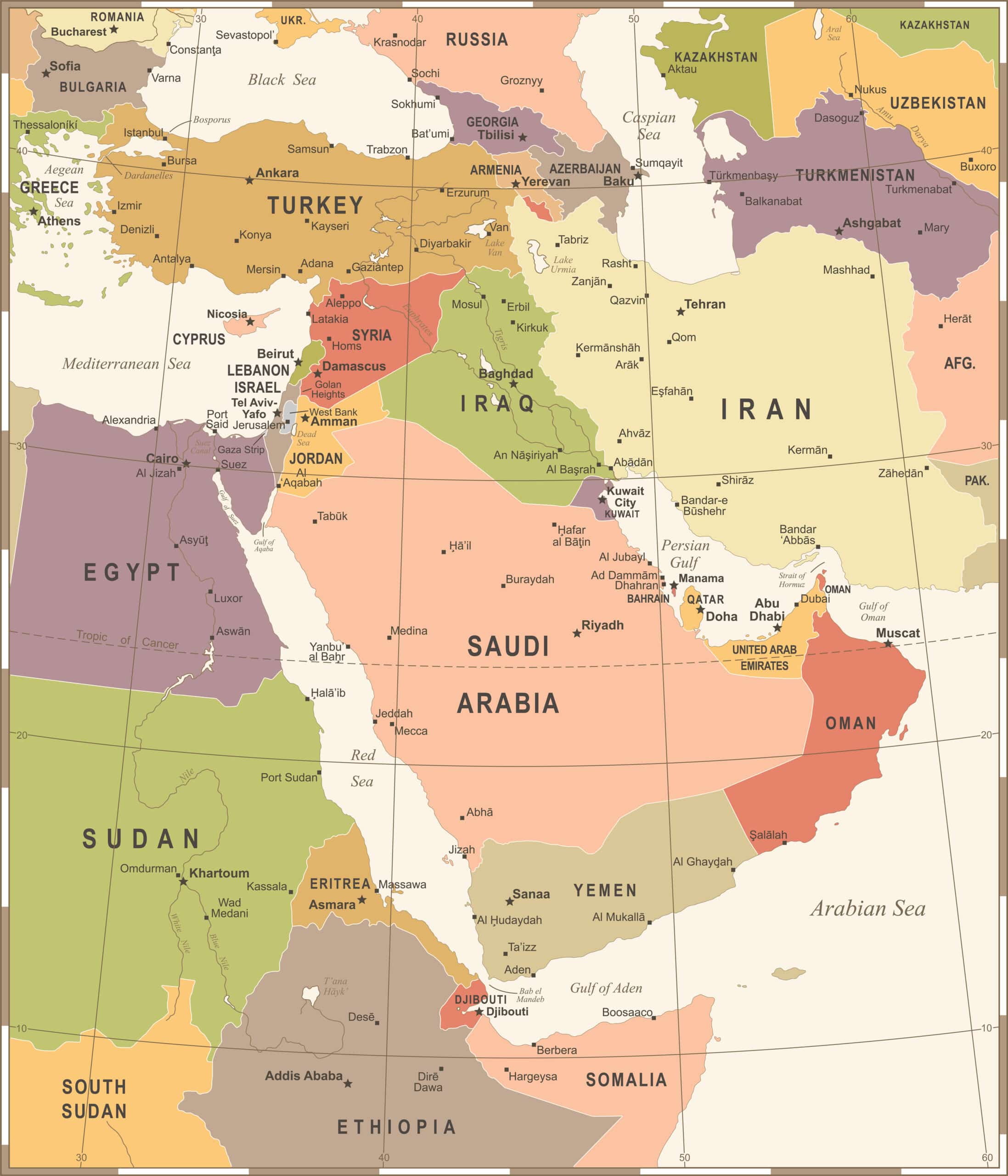
The US is weighing military and cyber options against Iran following weeks of nationwide protests across all 31 provinces. Tensions have further escalated after Iranian officials issued explicit warnings that US military bases and shipping infrastructure across the Middle East could be targeted in the event of American or Israeli strikes. In response, Washington has begun withdrawing some personnel from the Al-Udeid base in Qatar, signalling heightened concern over near-term escalation.
The protests themselves, initially driven by economic grievances, have evolved into overt political dissent against the ruling clerical establishment, marking the most sustained unrest since 2009. Iranian security forces have responded with force, resulting in hundreds – potentially thousands – of deaths, mass arrests, and a nationwide communications blackout aimed at limiting mobilisation and external scrutiny.
Foreign Minister Abbas Araqchi has signalled that Tehran remains open to dialogue with Washington, though the risk of US action before negotiations advance remains. Regardless of whether the US ultimately carries out strikes or refrains from doing so, Iran is unlikely to experience regime change. The regime retains institutional cohesion, loyalty from core security bodies, and a proven capacity to suppress mass protest even under significant domestic pressure.
Comparisons to Venezuela, following the US extraction of President Nicolas Maduro earlier this year, overstate the likelihood of a similar approach in Iran. Although Iran has been weakened by the June 2025 strikes on its nuclear programme, sustained sanctions pressure, and the degradation of allied groups such as Hezbollah and Hamas, the strategic and regional risks of forced leadership removal remain prohibitive.
The most immediate implication is the entrenchment of prolonged instability rather than decisive political transition. Past protest movements – from 1999 through the 2009 Green Movement and the 2022 Woman, Life, Freedom protests – have consistently resulted in intensified repression and regime consolidation. Current dynamics suggest a continuation of this pattern.
Regionally, explicit threats to US bases raise the risk of miscalculation. Any US or Israeli escalation would likely prompt asymmetric responses by Iran and its aligned actors across Iraq, Syria, Yemen and the Horn of Africa, broadening the geographic scope of instability. This would complicate de-escalation even if diplomatic channels remain open and increase exposure for US partners hosting military infrastructure.
Energy and maritime security remain key transmission channels. Heightened tensions increase the likelihood of episodic disruption to shipping routes linked to the Strait of Hormuz and adjoining Gulf corridors. While full-scale closure remains unlikely, persistent interference, elevated risk premia, and insurance pressures are probable. Energy markets have so far absorbed the risk of disrupted Iranian supply, but perceptions of insecurity around Gulf infrastructure continue to influence price volatility.
The most likely trajectory is a blend of asymmetric pressure and diplomacy. The US and Israel are expected to prioritise cyber activity, intelligence operations, and signalling through force posture adjustments, while keeping negotiations open. Iran is likely to engage tactically, sufficiently convinced that escalation risks are real, with potential limited movement on the nuclear file.
However, even in a negotiated scenario, Iran will remain a structural driver of regional uncertainty. Threats to US bases, persistent proxy networks, and unresolved internal pressures mean volatility will endure beyond any short-term diplomatic breakthrough. Periods of calm are likely to be shorter, more fragile, and punctuated by episodic escalation driven by deterrence signalling rather than strategic resolution.
On January 13, Washington designated the Jordanian, Lebanese and Egyptian branches of the Muslim Brotherhood as terrorist organisations. The move may cause some discomfort in the royal court but is likely to be quietly welcomed, particularly given the strong showing of the Islamic Action Front, the Brotherhood’s political arm, in the September 2024 elections, where it secured around 30% of parliamentary seats. The designation narrows the movement’s regional political and financial space and aligns US policy more closely with long-standing Jordanian positions.
The decision comes alongside a period of intensified US-Jordanian security cooperation, particularly inside Syria. On January, Jordanian F-16s joined large-scale US airstrikes against ISIS targets across Syria under Operation Hawkeye Strike. The operation followed the killing of US personnel near Palmyra and involved more than ninety precision munitions striking ISIS infrastructure and leadership nodes. Jordan’s participation demonstrated its continued willingness to play an operational military role alongside the US.
These developments highlight how Jordan is strengthening its value to Washington and reinforcing its broader regional relevance at a time of regional flux and shifting US priorities.
Jordan’s renewed relevance reflects a broader recalibration of its relationship with the Trump administration. In recent years, Amman’s traditional strategic value to Washington, anchored in its peace treaty with Israel, appeared to diminish as the UAE deepened ties with Israel under the Abraham Accords. Israel’s war in Gaza and its ongoing annexation of the West Bank have since generated direct security risks for Jordan and strained Amman’s relationship with Israel, even as US-Israel ties remain close.
Against this backdrop, Jordan’s engagement on Syria has become a key channel for restoring its standing in Washington. Following the fall of the Assad regime and the emergence of interim President Ahmad al Sharaa, Jordan positioned itself as a pragmatic interlocutor capable of managing sensitive files along Syria’s southern and northern fronts.
Diplomatically, Jordan has taken a leading role in southern Syria, particularly in Sweida, where clashes between Druze and Bedouin groups in July 2025 threatened wider instability. Amman hosted joint meetings with US officials and Syria’s new authorities, producing a trilateral roadmap and a working group tasked with supporting a ceasefire, stabilisation measures and longer-term political and reconstruction efforts. Jordanian Foreign Minister Ayman Safadi has consistently framed developments in southern Syria as directly linked to Jordan’s national security.
Jordan also deepened cooperation with the US on the Aleppo file and reaffirmed the need to uphold existing commitments on Kurdish withdrawal and de-escalation. Combined with its military cooperation against ISIS, these efforts show that Jordan continues to provide strategic value to the US despite assumptions that Trump’s closer ties with the UAE and Israel might have marginalised Amman. Jordan has instead positioned itself as the partner willing to manage complex portfolios that are central to regional stability.
The US designation of the Muslim Brotherhood adds a further strategic layer, reinforcing Jordan’s argument that domestic stability and regional security are interconnected and that its cooperation with Washington in Syria is part of a broader effort to contain transnational threats.
Jordan’s ability to sustain its renewed relevance will depend on continued delivery against US priorities in Syria and beyond. The current phase of cooperation is reinforced by strong personal relationships. Foreign Minister Ayman Safadi maintains close ties with Tom Barrack, while King Abdullah II has established a direct working relationship with Steven Witkoff. These connections have helped anchor cooperation in an administration where foreign policy decision-making is heavily influenced by personal trust and access.
However, closer ties do not equate to special treatment. On Wednesday, President Donald Trump announced an indefinite suspension of processing immigrant visas for citizens of 75 countries, including Jordan. The decision reinforces the administration’s transactional approach and highlights that cooperation in one domain does not insulate partners from broader policy shifts.
Jordan should therefore expect continued US demands as the price of relevance, potentially extending beyond Syria to wider regional security cooperation. Managing these expectations while safeguarding domestic stability and regional relationships will remain a delicate balancing act for Amman.

1 To Watch
Crackdowns on political opposition and public dissent are increasing the risk of instability in Jordan
May 22, 2025
1 To Watch
Donald Trump has an historic opportunity to negotiate a much tougher nuclear deal with Iran – will he seize it?
April 3, 2025
1 To Watch
The transitional government must focus on four key areas to ensure that unity is maintained.
December 24, 2024
© Azure Strategy 2026.