1 To Watch
The cost of control: Amman risks the stability it aims to protect
Crackdowns on political opposition and public dissent are increasing the risk of instability in Jordan
May 22, 2025


The impact of the US–Israeli conflict with Iran on Saudi Arabia’s economy is best understood as an intensification of pre-existing constraints.
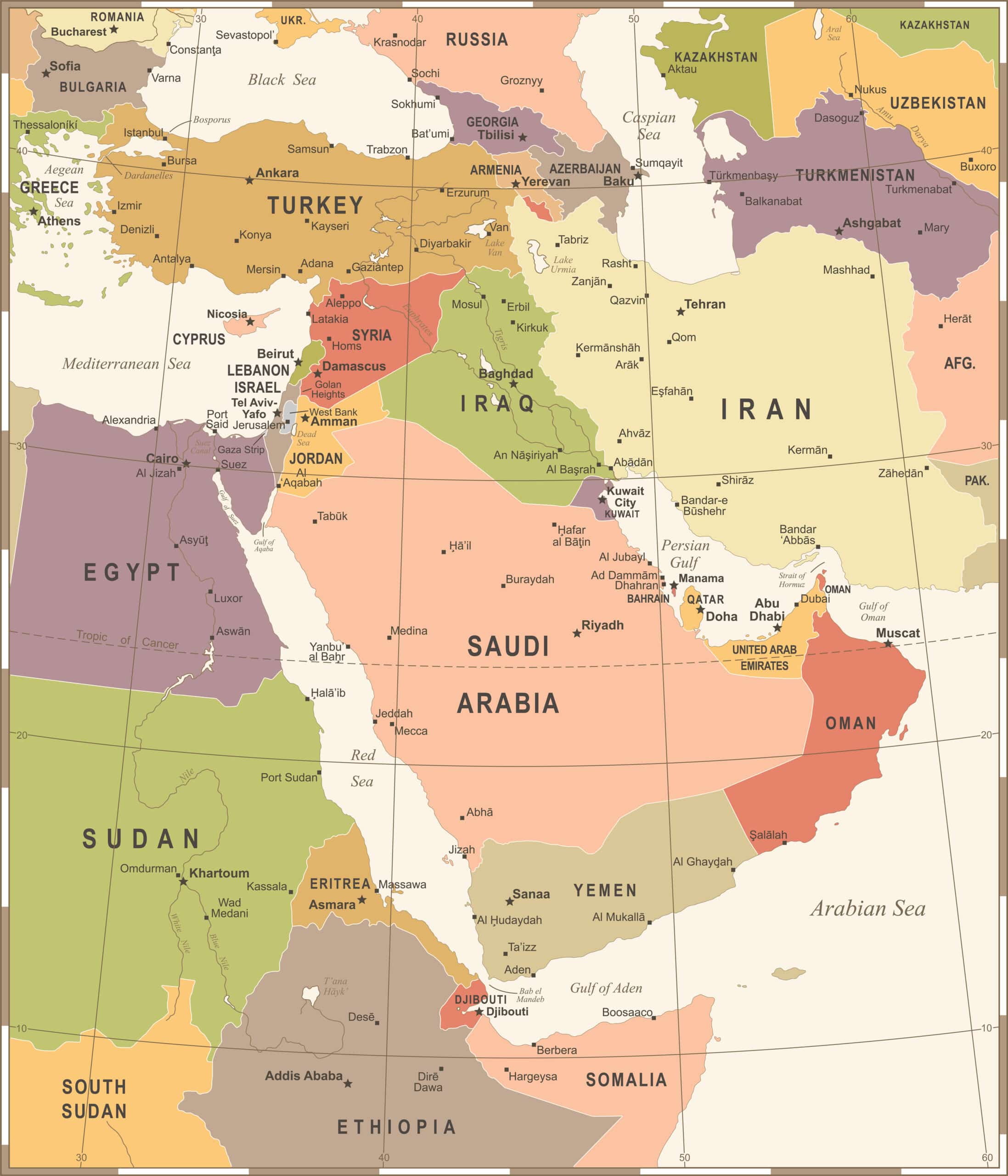
The impact of the current US–Israeli conflict with Iran on Saudi Arabia’s economy is best understood as an intensification of pre-existing constraints rather than a discrete shock. Perhaps counterintuitively, the immediate economic impact may prove less acute than first assumed. The kingdom retains fiscal space, is rerouting oil exports through the Red Sea, and has the capacity to use the state balance sheet to cushion visible pressure points. That resilience, however, should not be mistaken for insulation. The more significant effect is likely to be longer term.
Prior to the war, the kingdom was already managing a narrowing fiscal position, slower-than-required external capital inflows, and the need to sequence an increasingly complex portfolio of investments under Vision 2030. The result was a gradual move from expansion to prioritisation.
The conflict accelerates that change. It introduces additional, non-discretionary spending requirements while increasing perceived geopolitical risk, thereby constraining both fiscal space and external participation. In effect, a growing share of state resources will be required to restore and secure baseline stability, reducing the scope available for future economic transformation.
Before the conflict began, Saudi Arabia’s fiscal position had already begun to tighten. The kingdom recorded a deficit of USD 73.57 billion in 2025, with oil revenues declining by 20% year-on-year to USD 157.33 billion. At the same time, the transition envisaged under Vision 2030 remained dependent on continued state spending and external capital inflows. Net foreign direct investment reached USD 5.92 billion in Q1 2025, materially below the $100 billion annual inflows the programme ultimately requires.
The Kingdom was therefore faced with a delicate balancing act. Economic transformation is not just a long-term goal but a domestic political necessity. Growth, job creation and rising living standards underpin social stability. However, the resources required to deliver that transformation, through a model built on large-scale, state-led investment, were tightening. Pre-war oil prices were set to follow a lower for longer trajectory, and Riyadh had begun to scale back, delay or re-sequence parts of its most ambitious agenda.
In response to these pressures, a more managed domestic environment had begun to emerge. The economic adjustment underway pre-conflict was the first meaningful period of tightening experienced by the Mohammed bin Salman generation, which has been accustomed to rising state spending and expanding opportunity. In response, the authorities had already taken steps to contain potential discontent, combining targeted economic support with a more controlled political and information space. Measures have included targeted interventions such as caps on rent increases in major urban centres, aimed at containing cost-of-living pressures as growth moderated.
The response to economic contraction pre-conflict was a gradual reprioritisation rather than a change in direction. Investment sequencing became more selective, with delays and rescoping across a number of capital-intensive projects as it became clear that the Kingdom could not deliver against the wish list of mega projects. This was reflected most notably in NEOM, where timelines and scope have been adjusted to align more closely with financing capacity and delivery constraints. Within the Public Investment Fund (PIF), this was reflected in a shift toward sectors with clearer near-term returns and domestic spillovers, including tourism, logistics, industry and selected advanced technologies.
The conflict sharpens these constraints through three channels. First, it compresses the effective benefit of higher oil prices. While Brent crude has risen to around $110 per barrel, Saudi production has declined from approximately 10.1 million barrels per day in February to around 8 million bpd, with exports falling from 7.108 million bpd to 4.355 million bpd over the same period. Higher prices are therefore offset by lower volumes and disrupted flows.
Second, it introduces a set of non-discretionary expenditures that will not directly contribute to economic expansion. These include the repair and hardening of energy and critical national infrastructure, replenishment of defence inventories, and increased investment in deterrence capabilities in response to a more volatile regional environment. These expenditures are necessary to restore baseline stability but reduce the fiscal space available for diversification-related investment.
In practical terms, a greater share of public spending will need to be directed towards re-establishing pre-conflict conditions rather than extending economic transformation. In effect, the Kingdom is being forced to spend to stand still. There will be domestic implications too, as a greater share of state resources is absorbed by stabilisation rather than expansion, further tightening the margin for managing expectations under the existing social contract.
Third, the conflict comes at a moment when some of Vision 2030’s most visible successes were beginning to materialise. Tourism, in particular, had scaled rapidly, with around 122 million visitors in 2025 generating approximately 300 billion riyals in spending. Unemployment had fallen to roughly 7.1%, and non-oil exports were gradually increasing as a share of GDP. Those gains are now exposed. Tourism is acutely sensitive to perceptions of regional stability. Foreign investors – already cautious – are likely to reassess risk in a context where Iran remains a persistent and unpredictable neighbour, regardless of how the current conflict evolves. The issue is not only the immediate disruption, but the longer-term re-pricing of geopolitical risk attached to the kingdom.
That has direct implications for Vision 2030. The programme relies on a combination of state-led investment and increasing participation from foreign capital and private sector actors. If external participation weakens, the burden of delivery moves further onto the state at a time when fiscal capacity is already under pressure, reinforcing the need for prioritisation within PIF and across the broader project pipeline.
The result will be a further narrowing of Vision 2030’s executable scope. Projects with long development timelines, high upfront capital requirements and uncertain returns become more difficult to sustain alongside increased security-related spending. Investment is likely to be directed towards sectors that support resilience and economic stability, rather than those primarily aimed at long-term diversification or global positioning.
The net effect is that Saudi Arabia faces an even more constrained transition path.
Fiscal resources will increasingly be required to re-establish and secure baseline conditions – physical infrastructure, energy systems and national security – before they can be deployed towards further economic transformation. Vision 2030 will remain the central framework for economic policy, but its implementation is likely to proceed more selectively, with even tighter prioritisation and a greater emphasis on sequencing.
The conflict will not alter the direction of travel, but it will reduce the range of feasible outcomes within a given timeframe, as the balance between stability and delivery becomes more difficult to sustain domestically.


1 To Watch
Crackdowns on political opposition and public dissent are increasing the risk of instability in Jordan
May 22, 2025
1 To Watch
Donald Trump has an historic opportunity to negotiate a much tougher nuclear deal with Iran – will he seize it?
April 3, 2025
1 To Watch
The transitional government must focus on four key areas to ensure that unity is maintained.
December 24, 2024
© Azure Strategy 2026.