1 To Watch
The cost of control: Amman risks the stability it aims to protect
Crackdowns on political opposition and public dissent are increasing the risk of instability in Jordan
May 22, 2025


The trajectory points away from collective Gulf defence and towards a fragmented but competitive security environment.
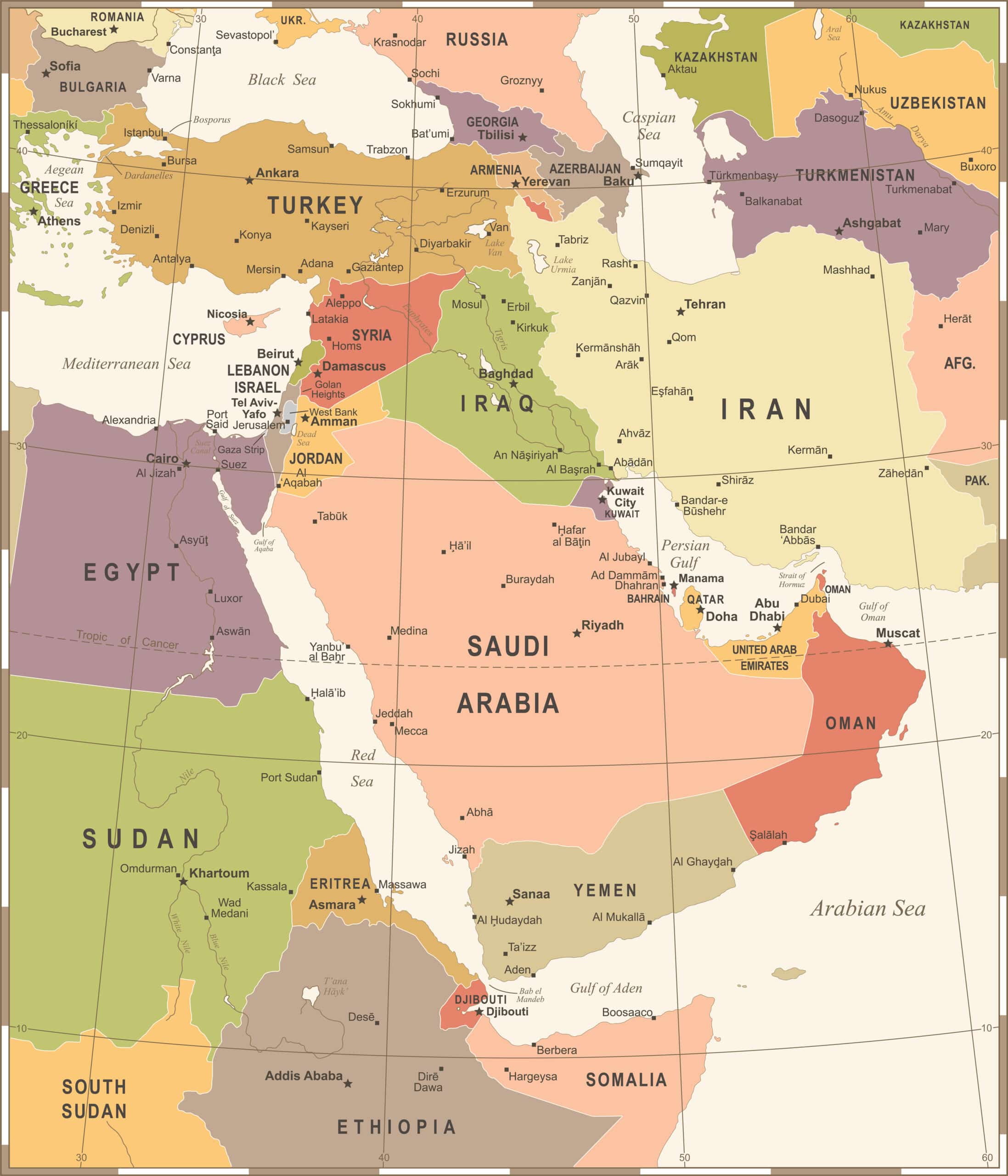
On January 19, the UAE and India announced a letter of intent to establish a Strategic Defence Partnership during President Sheikh Mohamed bin Zayed Al Nahyan’s state visit to New Delhi. The defence announcement was paired with economic and energy agreements, most notably a ten-year LNG supply contract valued at approximately USD 3bn, under which ADNOC Gas will deliver 0.5m metric tonnes per year to India’s Hindustan Petroleum from 2028. Leaders also reiterated their ambition to expand bilateral trade to USD 200bn by 2032, up from USD 100bn in 2025. The UAE is already India’s third largest trading partner globally.
In parallel, Saudi Arabia, Turkiye and Pakistan have been negotiating a trilateral defence arrangement reflecting a more traditional collective security logic. Talks began in early 2025, initially as bilateral Saudi-Pakistan discussions driven by Riyadh’s concern about regional escalation risks and long-term force readiness. These led to the Strategic Mutual Defence Agreement signed in September 2025, committing each side to treat an attack on one as an attack on both – although the operational infrastructure and systems are not yet in place. Turkiye subsequently joined the discussions to broaden the framework’s operational and industrial scope. By January 2026, officials confirmed that a draft trilateral framework had been prepared, although it remains unsigned.
Both defence tracks are unfolding amid increasingly open Saudi-UAE competition. While Riyadh and Abu Dhabi have cooperated tactically at different moments, they have rarely shared a fully aligned regional strategy. Since 2022, divergences have sharpened over Yemen, economic competition within the Gulf, Red Sea security and influence in the Horn of Africa.
The UAE-India defence partnership is best understood as the culmination of a long process rather than a sudden pivot. Military engagement between the two sides spans more than two decades, beginning with Exercise Desert Eagle between the Indian and UAE air forces in the early 2000s, expanding into regular naval cooperation and port calls in the Arabian Sea, and reaching a new level with Exercise Desert Cyclone in January 2024, the first full joint land forces exercise held in Rajasthan. A second iteration was held in Abu Dhabi in December 2025. What is new in 2026 is not the substance of cooperation, but its formal elevation at a moment when Saudi-UAE tensions have become more visible.
The timing suggests Abu Dhabi is using the India track to widen its margin for manoeuvre as Saudi-UAE tensions become more explicit, enhancing resilience and optionality through external reinforcement rather than formal defence guarantees. India offers scale in training infrastructure, military education, maritime domain awareness, cyber capability and logistics, while remaining politically cautious about direct involvement in Middle Eastern conflicts. This combination is particularly attractive for the UAE, whose security model prioritises deterrence, rapid crisis response and economic continuity.
Saudi Arabia’s trilateral track with Turkiye and Pakistan reflects a different strategic preference. Saudi Arabia is no longer content to rely on Gulf consensus or Western guarantees alone, particularly as its strategic priorities increasingly diverge from those of Abu Dhabi in theatres such as Yemen and the Red Sea.
The September 2025 Strategic Mutual Defence Agreement with Pakistan marked a shift from symbolic cooperation towards explicit collective defence language. Turkey’s inclusion would add operational and industrial weight, drawing on Ankara’s combat tested unmanned systems, air defence capabilities and land platforms, alongside Pakistan’s depth in manpower, training pipelines and doctrine. Together, the three could form a loose but functional security grouping aligned with Saudi ambitions for greater strategic independence and a more assertive regional posture.
The UAE and Saudi Arabia are pursuing competing security models. The UAE is advancing a modular approach that links defence cooperation with trade, energy, logistics and technology. Saudi Arabia is testing bloc style arrangements centred on interoperability, collective commitments and defence production. For smaller regional states, including Egypt, Jordan, Oman and countries along the Horn of Africa, this creates both opportunity and pressure as they are increasingly courted, particularly for basing rights, port access and air corridors. At the same time, they face greater pressure to navigate between rival security models without being drawn into their competition.
Furthermore, the current turn towards bespoke bilateral and trilateral arrangements further weakens the case for a GCC-wide security framework. Collective Gulf defence has been debated since the 1980s, yet progress has repeatedly stalled due to divergent threat perceptions and national priorities. As Saudi Arabia and the UAE invest political and financial capital in external partnerships that bypass Gulf institutions, it becomes even less likely that an integrated GCC defence architecture will materialise, not least because of growing tensions between Riyadh and Abu Dhabi.
For the UAE-India partnership, credibility will rest on implementation. Key indicators include the creation of joint defence industrial projects, sustainment or maintenance hubs, and the expansion of exercises beyond symbolic drills. Continued naval cooperation in the Arabian Sea and western Indian Ocean, building on existing port access and maritime coordination, would signal progress.
On the Saudi-Turkiye-Pakistan track, the next milestone is whether the draft trilateral framework is formally signed and operationalised. Early signs of seriousness would include regular joint training rotations, cooperation on UAV and air defence systems, and movement towards shared procurement standards or co-production.
At a broader level, the trajectory points away from collective Gulf defence and towards a fragmented but competitive security environment. Influence is likely to accrue to those states that can bundle defence cooperation with economic access, technology transfer and crisis support. In this sense, the Saudi-UAE rivalry has a direct impact on how security is organised and delivered in an increasingly multipolar Middle East.


1 To Watch
Crackdowns on political opposition and public dissent are increasing the risk of instability in Jordan
May 22, 2025
1 To Watch
Donald Trump has an historic opportunity to negotiate a much tougher nuclear deal with Iran – will he seize it?
April 3, 2025

1 To Watch
The transitional government must focus on four key areas to ensure that unity is maintained.
December 24, 2024
© Azure Strategy 2026.