1 To Watch
The cost of control: Amman risks the stability it aims to protect
Crackdowns on political opposition and public dissent are increasing the risk of instability in Jordan
May 22, 2025


Tensions in Hadhramaut, Yemen’s largest and most economically significant governorate, rose sharply in late November.
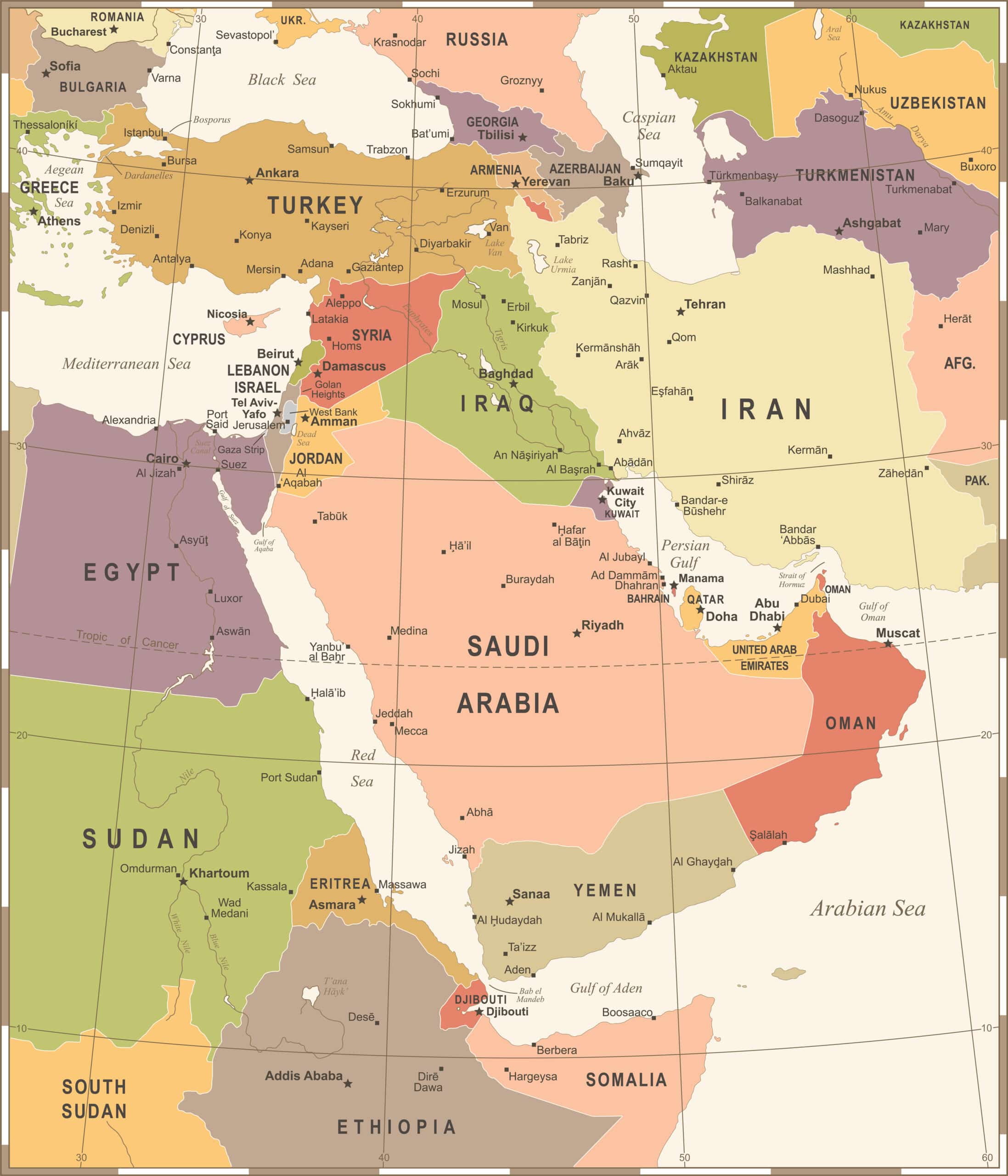
Tensions in Hadhramaut, Yemen’s largest and most economically significant governorate, rose sharply in late November and early December. UAE-backed Southern Transitional Council (STC) units redeployed from Aden and Shabwa into Wadi Hadhramaut, advancing toward positions held by the First Military Region – an institution historically backed by Riyadh and aligned with Islah networks – marking the most assertive STC advance into the inland Wadi to date. The deployment created new frictions around Sah and the approaches to Seiyun, signalling the UAE was testing, and seeking to upset, the balance of control in the governorate.
Simultaneously, the Hadhramaut Tribal Alliance (HTA), a Saudi-backed bloc led by influential Sheikh Amr bin Habrish and supported by many of Wadi Hadhramaut’s largest tribal groupings, took control of oil fields within the Masila basin, prompting state-owned energy company PetroMasila to temporarily halt oil production for security reasons. The group stated that this was done to protect the assets from foreign aggression or interference.
A turning point came when the STC sought to organise a mass rally in Seiyun, a city symbolically associated with central government authority in the east. Clashes erupted around checkpoints after First Military Region units attempted to prevent the rally from taking place. STC fighters advanced into Seiyun, seizing key administrative and security sites. The advance toward Seiyun, combined with HTA mobilisation to the west around al-Qatn, indicate a struggle for territorial control.
Shortly after the fighting, the STC formally declared “Operation Promising Future,” framed as an effort to liberate the Wadi Hadhramaut area from rebellious tribal elements. According to STC statements, and reiterated by several regional media outlets, the group now claims to hold full control over Hadhramaut Valley. At the same time, Saudi-backed tribal actors have withdrawn from oil facilities under mediation brokered by Riyadh, and PetroMasila fields are now under the control of the Hadrami Elite Forces – which, while officially under the authority of the central government, are pro-STC and heavily backed by the UAE.
Saudi-aligned tribal and political leaders have characterised the STC advance as an incursion by non-Hadhrami forces seeking to undermine local governance and upset the fragile equilibrium of local politics. Conversely, Emirati-aligned channels and STC figures framed the operation as a stabilisation effort aimed at securing key corridors and confronting what they termed tribal obstructionism around critical infrastructure and associated revenue flows. These competing narratives suggest both sides may be preparing for a protracted contest over legitimacy in Hadhramaut.
Hadhramaut is a uniquely important governorate in Yemen’s fractured geography. It contains the Masila basin – historically Yemen’s largest hydrocarbon-producing region – and provides the principal land and logistical bridge between the Arabian Sea coast and the eastern desert region that connects into Saudi Arabia’s south. Crucially, Hadhramaut remains one of the few areas where functioning institutions and tribal governance have sustained a level of stability absent elsewhere. Its leading tribes – including Hamoum, the largest in Wadi Hadhramaut, as well as Kindah, al-Shanafir, Bani Murrah, and others – retain significant authority over security, dispute resolution, and access to economic opportunity. In this context, any attempt by an external actor to reshape governance inevitably intersects with tribal structures.
The UAE’s engagement in Hadhramaut is an extension of its broader maritime security posture along the Red Sea–Gulf of Aden corridor. The STC remains its most dependable partner in Yemen, and supporting its eastward push serves Emirati aims of securing access to coastal infrastructure, consolidating influence along shipping routes, and cultivating a network of political and security actors who can anchor long-term UAE presence. The STC’s own objectives align; it seeks to extend its administrative and security footprint into Hadhramaut, secure oil and gas revenues necessary for fiscal autonomy, and establish territorial continuity between Aden, Shabwa, Mukalla, and Wadi Hadhramaut as part of its long-term project of southern self-determination. The Masila basin is central to this; without it, the economic viability of an independent South Yemen would be severely constrained.
Saudi Arabia has a different objective. Riyadh has historically preferred a weak but governable Yemen – fragmented enough to limit the emergence of a strong central state, yet cohesive enough to avoid destabilising Saudi territory.
However, the rise of the Houthis – which has demonstrated the high cost of state collapse and the risks posed by an Iranian-supported actor – has altered this calculus. Saudi Arabia is now seeking to prevent two outcomes simultaneously in Hadhramaut. First, it aims to prevent further Houthi consolidation in the north, and second, the emergence of a UAE-backed southern entity that could redraw Yemen’s political geography to Riyadh’s disadvantage. The HTA and Hadramout National Council serve as Riyadh’s principal partners in pursuit of these objectives. The HTA’s tribal constituencies, including Hamoum and Kindah-linked networks, give Riyadh access to the political heartland of the Wadi Hadhramaut and direct leverage over the hydrocarbon sector. Maintaining this balance is central to Saudi efforts to prevent both Houthi expansion and STC-driven secessionism.
The escalating Saudi–UAE rivalry in Hadhramaut is just one part of a wider struggle for regional influence between the two states. Indeed, the situation in Yemen echoes the two states’ competing roles in Sudan, where each supports different factions. Saudi Arabia is seeking to consolidate security buffers as it pursues economic transformation at home, while the UAE is working to lock in long-term influence along key maritime and commercial corridors. With several regional arenas in flux, both see Hadhramaut as an opportunity to shape the political order in Yemen at a moment when the balance of power is still unsteady.
The Presidential Leadership Council (PLC), the internationally recognised government that is intended, in theory, to unify anti-Houthi forces, has again revealed its inherent weakness. Its members represent competing Saudi- and UAE-aligned interests and therefore the PLC does not function as a cohesive national authority. The PLC’s inability to intervene meaningfully in the Hadhramaut escalation suggests its relevance is diminishing and calls into question its credibility, especially over the long term as a vehicle for political consolidation.
The trajectory of the conflict depends on whether the STC can establish itself in Wadi Hadhramaut and extend influence toward the Masila basin. If it succeeds in consolidating its presence and securing access to the Masila basin, the economic feasibility of an eventual southern state increases substantially. Saudi Arabia, acutely aware of the strategic implications, is likely to deepen support for tribal and military actors opposed to STC expansion. This heightens the risk of a prolonged proxy confrontation with both sides mobilising local partners – HTA tribes such as Hamoum, al-Shanafir, and Kindah on one side, and STC-aligned coastal tribes and elite families on the other.
The PLC, structurally paralysed, will remain unable to bridge the divide. The Houthis, meanwhile, will continue to benefit from fragmentation among their rivals. With the south divided and external patrons focusing on competitive positioning rather than coordinated strategy, the Houthis face no meaningful political internal challenge.
Yemen is increasingly drifting towards a tripartite territorial configuration, with a consolidated Houthi north, a UAE-aligned STC-led south and contested eastern territories marked by Saudi–UAE rivalry and shifting tribal alignments. Such an outcome would complicate any comprehensive peace settlement, entrench localised political orders, and extend Yemen’s fragmentation well into the medium term.

1 To Watch
Crackdowns on political opposition and public dissent are increasing the risk of instability in Jordan
May 22, 2025
1 To Watch
Donald Trump has an historic opportunity to negotiate a much tougher nuclear deal with Iran – will he seize it?
April 3, 2025
1 To Watch
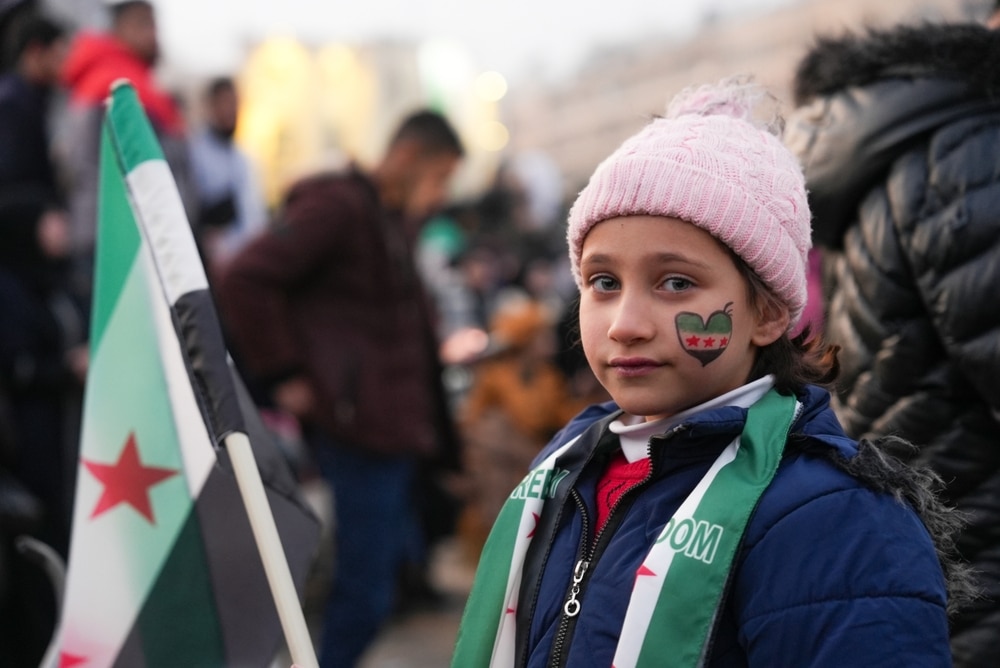
The transitional government must focus on four key areas to ensure that unity is maintained.
December 24, 2024
© Azure Strategy 2026.