1 To Watch
The cost of control: Amman risks the stability it aims to protect
Crackdowns on political opposition and public dissent are increasing the risk of instability in Jordan
May 22, 2025


The UK’s Prince of Wales is set to visit Riyadh to reinforce political, economic and security ties and Saudi–UAE advance the Black Sea cable project.
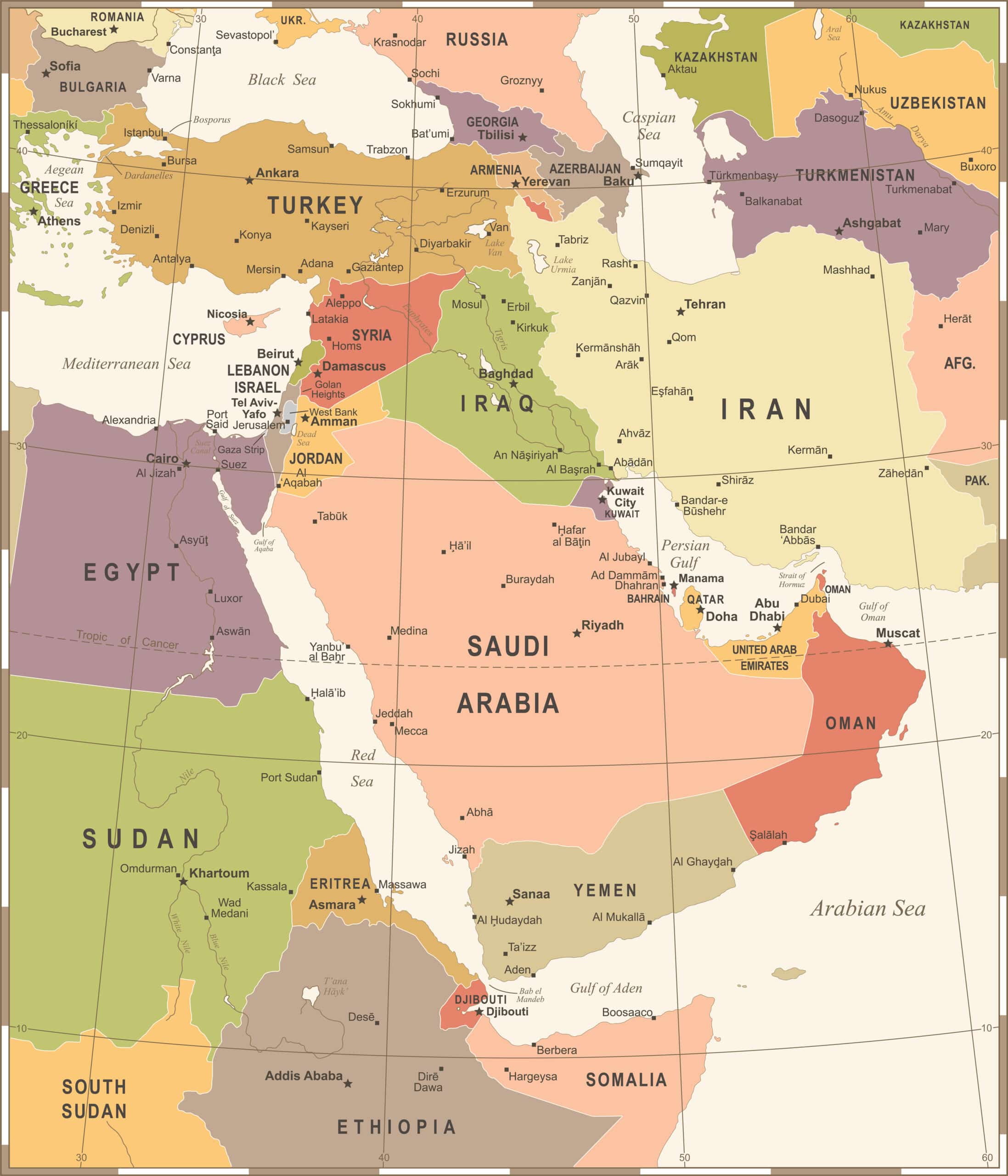
The Prince of Wales is scheduled to visit Saudi Arabia from 9–11 February 2026 at the request of the UK government to reinforce political, economic and security ties with one of its most consequential partners in the Middle East. The visit is timed to coincide with Riyadh’s World Defence Show, and London is also using the moment to advance negotiations over Saudi participation in its sixth-generation Global Combat Air Programme (GCAP), a multilateral effort with Italy and Japan to develop a next-generation combat aircraft by 2035.
Economic engagement is an equally central driver of the visit. Saudi investment into the UK has exceeded $20bn since 2017, with capital flowing into finance, infrastructure and technology sectors. In 2024, bilateral trade reached approximately £17bn, making Saudi Arabia the UK’s largest trading partner in the Middle East. UK foreign direct investment stock in Saudi Arabia stood at £6.5bn at the end of 2024, reflecting rising two-way commercial integration. Shared economic initiatives such as the UK-Saudi Strategic Partnership Council process and joint economic forums aim to align British services, education and professional capabilities with Saudi Vision 2030 priorities.
Defence trade is a prominent component of that economic relationship. Saudi Arabia is the UK’s largest defence export market, with roughly £6bn in licensed exports between 2018 and 2023 encompassing fighter aircraft, precision munitions, support services and training. The visit is a sustained effort to deepen this cooperation in a period of heightened regional volatility and increased competition from the United States, Europe and emerging Asian suppliers.
With competition for Saudi capital and geopolitical influence intensifying, London must demonstrate that it offers economic and security value beyond legacy relationships.
The regional security environment has sharpened the defence dimension of UK-Saudi engagement. Israel’s campaign in Gaza, combined with Houthi attacks on Red Sea shipping and broader Iran-linked activity, has reinforced Gulf concerns about escalation risk, air and missile defence, and security of critical infrastructure. Saudi Arabia’s security posture continues to emphasise defensive resilience, force sustainment and integrated air defence.
This aligns with areas where the UK retains comparative strengths. UK defence engagement extends beyond platforms to training, doctrine and lifecycle support, which support Saudi emphasis on readiness and long-term capability. British defence firms are also positioning themselves within Saudi Arabia’s localisation agenda, focusing on skills transfer and industrial capacity instead of one-off procurements.
The GCAP initiative intensifies this focus. Saudi interest in joining a next-generation combat aircraft programme matches Vision 2030 goals to expand domestic industry and reinvest defence expenditure locally. GCAP partners are evaluating Saudi participation in ways ranging from phased workshare to full partner status, although Japan has expressed caution over technology transfer and industrial timelines. Meanwhile, Italy has taken a more positive position, suggesting that Saudi financial strength and industrial plans could bolster the programme.
Prince William’s visit comes as Saudi Arabia is expanding defence and security relationships across the US, Europe and Asia. The UK faces the prospect of declining relevance in the Kingdom, retaining trust but losing ground to competitors able to offer greater scale, financing or political alignment.
Royal diplomacy helps to manage that risk without erasing it. Longstanding ties between the British and Saudi royal families continue to provide access, continuity and discretion. That channel allows the UK to sustain engagement without public political alignment, but it remains an enabler rather than a substitute for substantive, deliverable cooperation.
The degree to which the visit yields strategic traction will depend on whether it generates concrete follow-on outcomes. Defence cooperation remains the most immediate vector, particularly around sustainment, air and missile defence, training, industrial localisation and GCAP participation.
The visit also tests the UK’s broader value proposition. Saudi policymakers increasingly assess partnerships in terms of capacity to enable ambition rather than reflect history. London’s ability to position itself as a platform for Saudi internationalisation through capital markets, legal and professional services and structured investment channels will matter more than symbolism.
Progress on the UK-GCC free trade agreement remains another indicator. UK officials have suggested that an agreement is approaching, while GCC statements point to unresolved technical issues. Movement on the FTA would strengthen the commercial underpinnings of defence and services cooperation and reinforce the UK’s relevance beyond bilateral engagement.
The visit also highlights a broader reality for UK Gulf strategy. Historical ties continue to confer access, but they no longer confer advantage by default. In a region defined by heightened insecurity and intensifying competition, London must demonstrate that it can deliver security value, economic scale and long-term partnership aligned with Saudi Arabia’s evolving priorities if it is to remain not only relevant to the Kingdom, but a partner of choice.
With Ani Iaralishvili
The Black Sea Submarine Cable project is advancing as a strategically significant piece of energy infrastructure linking renewable electricity generation in Azerbaijan directly to European markets. Agreed in 2022 by Azerbaijan, Georgia, Romania and Hungary, the initiative is designed to transmit up to four gigawatts of renewable power across the Black Sea, creating what would be the world’s longest subsea electricity interconnector. If realised, it would establish a new east–west green energy corridor between the Caspian basin and the European Union.
While neither Masdar nor ACWA Power is responsible for constructing the cable itself, both firms are central to its commercial rationale. Their respective renewable investments in Azerbaijan provide the scale of generation required to justify the project. Without sufficient export-ready supply, the cable risks becoming stranded infrastructure rather than a functioning conduit for large-scale power flows. The project therefore sits at the intersection of European energy security concerns, Azerbaijan’s diversification strategy, and Gulf renewable firms’ long-term market positioning.
For Europe, the strategic significance of the Black Sea Submarine Cable extends beyond decarbonisation. Since Russia’s invasion of Ukraine, the EU has been forced to reconfigure its energy system at speed. Russian pipeline gas, which once accounted for roughly 40 percent of EU gas imports, has fallen sharply. While liquefied natural gas imports, particularly from the US, have filled part of the gap, this has increased Europe’s exposure to global LNG price volatility and political uncertainty.
At the same time, transatlantic energy ties are no longer viewed as risk-free. A more transactional US foreign policy environment and growing domestic pressure to prioritise American energy needs have sharpened European concerns about long-term reliability. Against this backdrop, electricity interconnections tied to renewable supply are increasingly attractive. They reduce exposure to fuel markets, insulate supply from geopolitical shocks, and align with climate commitments. The Black Sea route offers diversification not just away from Russia, but away from overdependence on any single external supplier.
The project also strengthens Azerbaijan’s role as an energy bridge between regions. Exporting renewable electricity to Europe allows Baku to reposition itself within European energy planning while hedging against long-term demand erosion for hydrocarbons.
Masdar and ACWA Power both view this context as a sizeable opportunity. Europe represents a large, creditworthy and policy-driven market with long-term demand for clean electricity. Masdar’s solar investments in Azerbaijan and ACWA Power’s wind and storage projects there are not only national decarbonisation plays; they are designed with export optionality in mind. Access to European demand improves asset valuation, lowers financing costs, and embeds Gulf firms more deeply in European energy systems.
This cooperation is notable given the broader UAE–Saudi context. Relations between Abu Dhabi and Riyadh have become visibly strained amid competition over influence, differing perceptions of regional security, economic leadership, and investment flows. Divergent approaches to OPEC+, trade policy and regional diplomacy have demonstrated that alignment between the two is increasingly selective rather than automatic.
Yet the Azerbaijan renewable sector highlights a capacity for compartmentalisation. In third markets where commercial logic is strong and political risk is diluted, both Masdar and ACWA Power have shown a willingness to coexist and, in some cases, complement one another. European energy demand provides a shared horizon that outweighs bilateral rivalry. The prize is durable access to a market that will shape global energy investment for decades.
The project’s viability will depend on several interlocking factors. Technical complexity remains high, given the scale and depth of the subsea connection. Capital requirements are substantial, and regulatory coordination across multiple jurisdictions will test political alignment and institutional capacity. Geopolitical uncertainty in the Black Sea region also introduces external risk factors that could affect timelines and investor confidence. Progress will hinge on sustained political backing from European states and credible long-term power offtake arrangements.
If these hurdles are cleared, the project would mark a shift in how Gulf renewable firms operate internationally. Rather than exporting capital into isolated projects, Masdar and ACWA Power would be helping to anchor cross-regional energy systems. This would deepen their strategic relevance to Europe at a time when energy security and climate policy are increasingly inseparable.
More broadly, the project illustrates how competition between the UAE and Saudi Arabia does not preclude convergence where interests align. European energy insecurity, shaped by the collapse of Russian supply and uncertainty around global energy politics, has created a long-term opportunity that both states recognise. Their ability to compartmentalise rivalry in pursuit of that opportunity may prove as important as the infrastructure itself.


1 To Watch
Crackdowns on political opposition and public dissent are increasing the risk of instability in Jordan
May 22, 2025
1 To Watch
Donald Trump has an historic opportunity to negotiate a much tougher nuclear deal with Iran – will he seize it?
April 3, 2025

1 To Watch
The transitional government must focus on four key areas to ensure that unity is maintained.
December 24, 2024
© Azure Strategy 2026.