1 To Watch
The cost of control: Amman risks the stability it aims to protect
Crackdowns on political opposition and public dissent are increasing the risk of instability in Jordan
May 22, 2025


Competition between the UAE and Saudi Arabia has entered a more overt and confrontational phase.
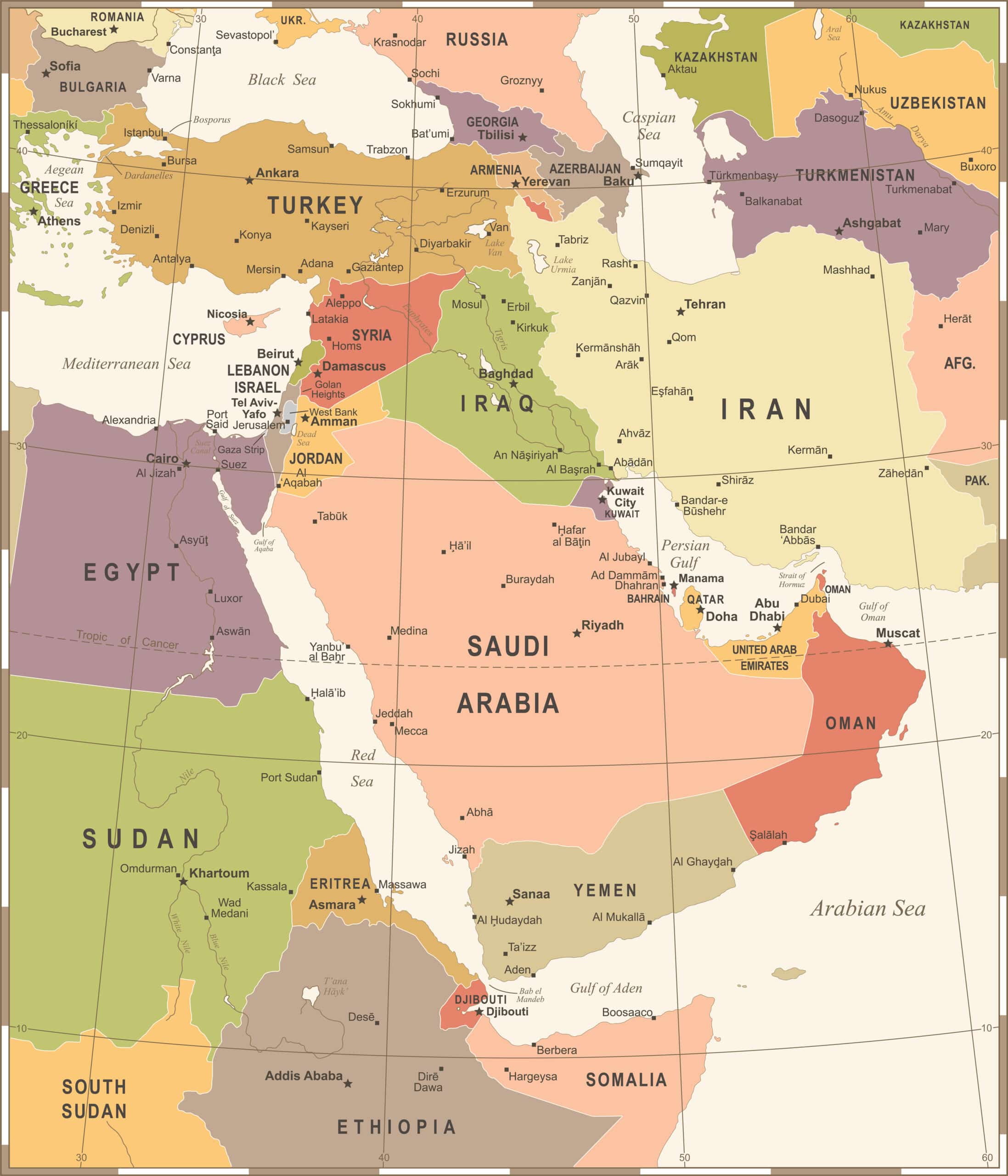
Competition between the UAE and Saudi Arabia has entered a more overt and confrontational phase. Abu Dhabi’s systematic use of non-state actors as instruments of foreign policy now spans multiple theatres, directly intersecting with Saudi security interests, most visibly in Yemen. While Riyadh has previously backed non-state groups, the UAE has embedded this approach as a core element of its security toolkit, eroding Saudi influence and challenging its traditional leadership role among Gulf Arab states.
This shift has coincided with widening competition beyond security, extending into investment flows, energy policy, artificial intelligence (AI), advanced technology, logistics and alliance building. The rivalry has also become more personalised, reflecting growing tension between Saudi Crown Prince Mohammed bin Salman and UAE President Mohammed bin Zayed. While both sides are likely to avoid an outright collapse in relations, the current phase marks a more visible escalation that reflects Riyadh’s growing discomfort with the trajectory of the relationship.
Saudi Arabia will continue to prioritise the diplomatic track, reinforcing its narrative as a stabilising regional power and credible international mediator. This posture supports Riyadh’s wider objective of sustaining investor confidence and advancing its long-term economic transformation agenda. However, conditions on the ground in Yemen remain resistant to rapid change. Previous Saudi-backed initiatives, including the Presidential Leadership Council, have failed to generate sufficient cohesion or legitimacy to address Yemen’s deeply fragmented political landscape.
Saudi Arabia was also effectively caught off guard by developments on the ground in Yemen. As Riyadh concentrated political bandwidth on domestic consolidation and economic transformation, it underestimated both the scale and durability of the UAE’s build-up of influence through local partners.
At the same time, domestic political considerations are narrowing room for compromise on both sides. For Riyadh, foreign policy credibility is increasingly intertwined with the authority of the crown prince and the success of Vision 2030. For Abu Dhabi, external activism reinforces a narrative of strategic autonomy and elite competence. These dynamics make de-escalation politically sensitive, even where it is strategically rational.
Speculation around a Saudi-led, Qatar-style boycott of the UAE is misplaced. Regional stability is a shared priority across the Gulf Cooperation Council, particularly given ongoing conflicts in Gaza, Lebanon, Syria and Yemen, alongside heightened risks of escalation involving Iran. Any attempt to replicate the 2017 boycott model would undermine international confidence, jeopardise flagship economic vision plans, and deter foreign investment at a critical juncture. It would also risk forcing the US to choose sides – an outcome that would be strategically counterproductive. Crucially, neither Abu Dhabi nor Riyadh has an interest in placing Washington in such a position, given the centrality of the US relationship to their respective security, economic and technological ambitions.
Importantly, deepening economic interdependence also constrains escalation. Cross-border capital exposure, shared market sensitivities and overlapping private sector interests act as informal stabilisers, limiting the scope for coercive economic measures despite intensifying competition.
In the near term, limited de-escalation, particularly on Yemen, could create space for pragmatic engagement, even as strategic competition intensifies. Saudi Arabia’s growing ability to compartmentalise disputes may prevent tensions from spilling uncontrollably across all domains. However, domestic political incentives and personalised leadership dynamics suggest rivalry will endure at a low level, and peak episodically.
Over time, the balance of power is likely to tilt in Riyadh’s favour, underpinned by its demographic scale, financial depth and expanding diplomatic reach. The most consequential arena of rivalry will be how both states court Washington. Competition for influence in the US – across security cooperation, technology, AI and energy – will increasingly define Gulf geopolitics. Ultimately, Saudi Arabia and the UAE are likely to focus less on forcing Washington to choose between them and more on positioning themselves as the most attractive partners for investment and strategic cooperation.

1 To Watch
Crackdowns on political opposition and public dissent are increasing the risk of instability in Jordan
May 22, 2025
1 To Watch
Donald Trump has an historic opportunity to negotiate a much tougher nuclear deal with Iran – will he seize it?
April 3, 2025
1 To Watch
The transitional government must focus on four key areas to ensure that unity is maintained.
December 24, 2024
© Azure Strategy 2026.