1 To Watch
The cost of control: Amman risks the stability it aims to protect
Crackdowns on political opposition and public dissent are increasing the risk of instability in Jordan
May 22, 2025


The deployment of the USS Gerald Ford to the region signals the US is serious about striking Iran.
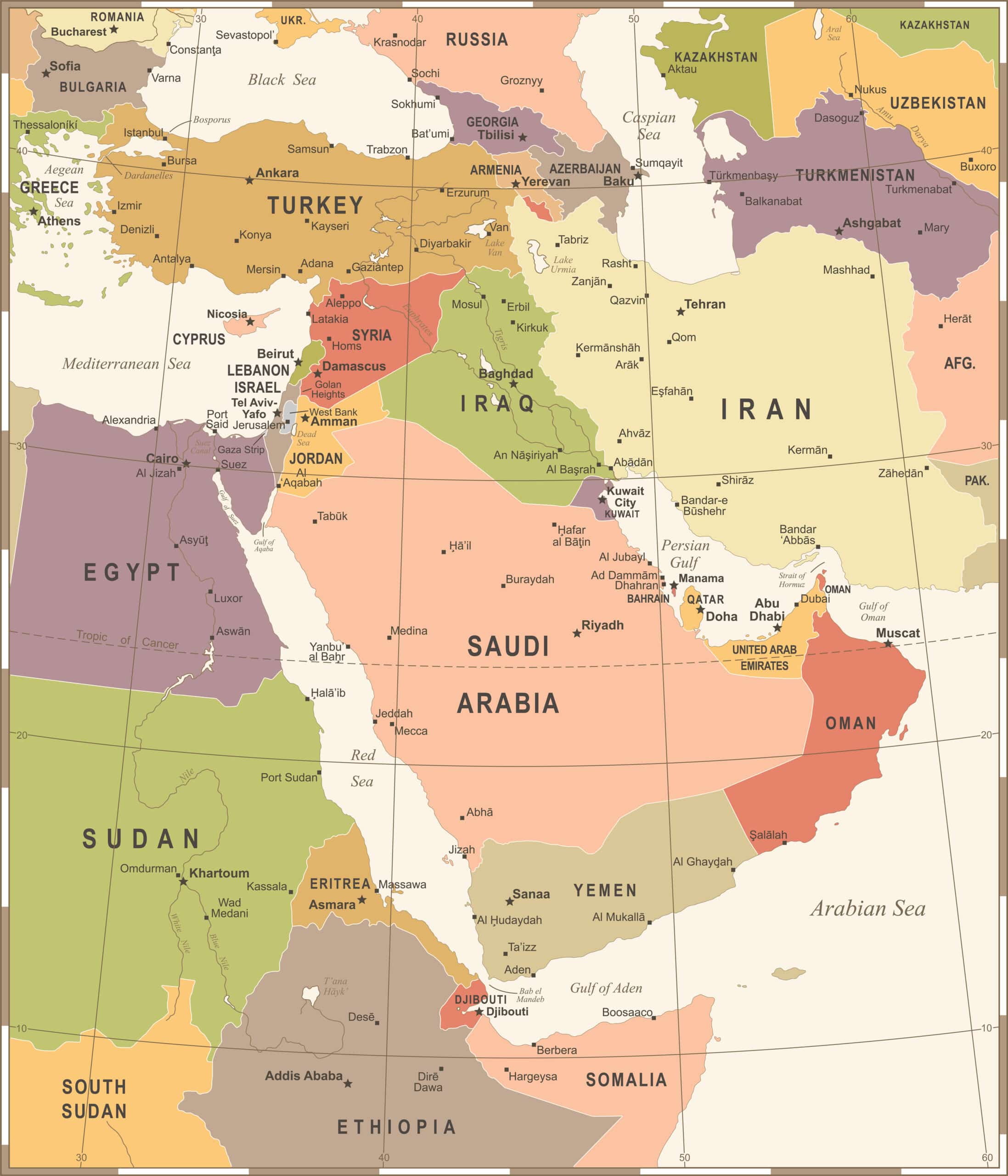
These are tense times in the Persian Gulf. The US is building up military forces in the region while the Iranians are threatening all surrounding regional countries with missile strikes. In the midst of this, the US has dispatched the world’s largest aircraft carrier – the USS Gerald Ford – to the region to reinforce the USS Abraham Lincoln carrier support group.
This is a significant move and indicates that the Oman-mediated US-Iran indirect talks are pro forma. The new deployment puts about a third of the US Navy’s current active fleet into the region around Iran and signals that President Trump is serious in his intent both to strike Iran’s leaders responsible for the massacre of protesters and to protect the civilian infrastructure of the US partners in the region who have been threatened by a retaliatory Iranian missile attack.
The background for this is a classic mismatch between events and capabilities. The widespread protests against Iran’s regime caught most observers by surprise, including the US. It is extremely unusual, if not unprecedented, in the last quarter century for the US to not have an aircraft carrier or at least an amphibious assault ship in the Arabian Sea or Persian Gulf; yet that was exactly the case when Iranians spontaneously began demanding regime change. The total offensive capability of the US Navy in the region at the time of the protests was three guided missile ships, each capable of launching a maximum 90 conventional missiles.
The nation-wide Iran protests, and the subsequent slaughter unleashed by the Iranian regime, was a shock in every sense. President Trump, who does not enjoy a reputation for detailed research in advance of his public remarks, took the podium on January 2 and promised support to the protesters.
This was a problem. While the US had the ability to launch a strike against any target in Iran, it probably did not have a detailed targeting package on the Revolutionary Guard, Police, and militia forces who were carrying out the slaughter of protesters. More importantly, the United States did not have a counter-strike force in place to deter an Iranian generalised strike against civil and economic targets in the Gulf, Israel and Azerbaijan. When Trump made his remarks, American military capabilities in the region were only sufficient to strike Iranian targets and then leave. This scenario naturally concerned America’s partners in the Gulf and elsewhere. Additionally, there remains considerable domestic opposition in the United States to any foreign military intervention, particularly a large-scale intervention such as would be likely against Iran.
Trump made a promise to the Iranian protesters that he didn’t have the ability to back up. Given that he would have to wait for a force buildup, the politically wise course of action would be to make an effort to resume talks with the Iranian regime while building up a counter-strike deterrence force to ensure that any American strike on Iran would be the end of the matter. This is where we are now.
The deployment of the Ford carrier support group indicates that a strike will come eventually. The Ford has been at sea for much longer than is the norm in the US Navy, and there will be significant costs in personnel and deferred maintenance as a result. This is not a casual deployment but rather a costly tradeoff that will impact future naval readiness in order to ensure the US has overwhelming military force in place for a strike.
So why will there be a strike? Looking at President Trump’s past actions, it is clear that he prefers to achieve his goals through economic measures, such as tariffs and sanctions. However, he also has a strong desire to set himself apart from previous Presidents whom he views as either weak (Biden, Obama) or feckless (Bush). For better or worse, Trump made a commitment to help Iranian protesters in a significant manner. Trump is notoriously thin-skinned; the acronym TACO (Trump Always Chickens Out) seems to irritate him more than it should. If he does not take action after his 2 January pledge, his remarks will be portrayed in the same light as Obama’s “red line” in Syria – an ineffective moment of bluster. Trump cannot abide this.
The Ford deployment therefore indicates a strike against Iran is inevitable. The talks with Iran have already become stale – the Iranian position is limited to nothing more than a revival of the Obama deal, which will not be acceptable to Trump. Therefore, the enhanced US naval deployment is further evidence that the US has not held off striking Iran because of diplomacy, politics or international opinion – but simply because of military logistics and force positioning. A strike will come.


1 To Watch
Crackdowns on political opposition and public dissent are increasing the risk of instability in Jordan
May 22, 2025
1 To Watch
Donald Trump has an historic opportunity to negotiate a much tougher nuclear deal with Iran – will he seize it?
April 3, 2025

1 To Watch
The transitional government must focus on four key areas to ensure that unity is maintained.
December 24, 2024
© Azure Strategy 2026.