1 To Watch
The cost of control: Amman risks the stability it aims to protect
Crackdowns on political opposition and public dissent are increasing the risk of instability in Jordan
May 22, 2025


Damascus has asserted control over north east Syria, putting an end to Kurdish ambitions for autonomy.
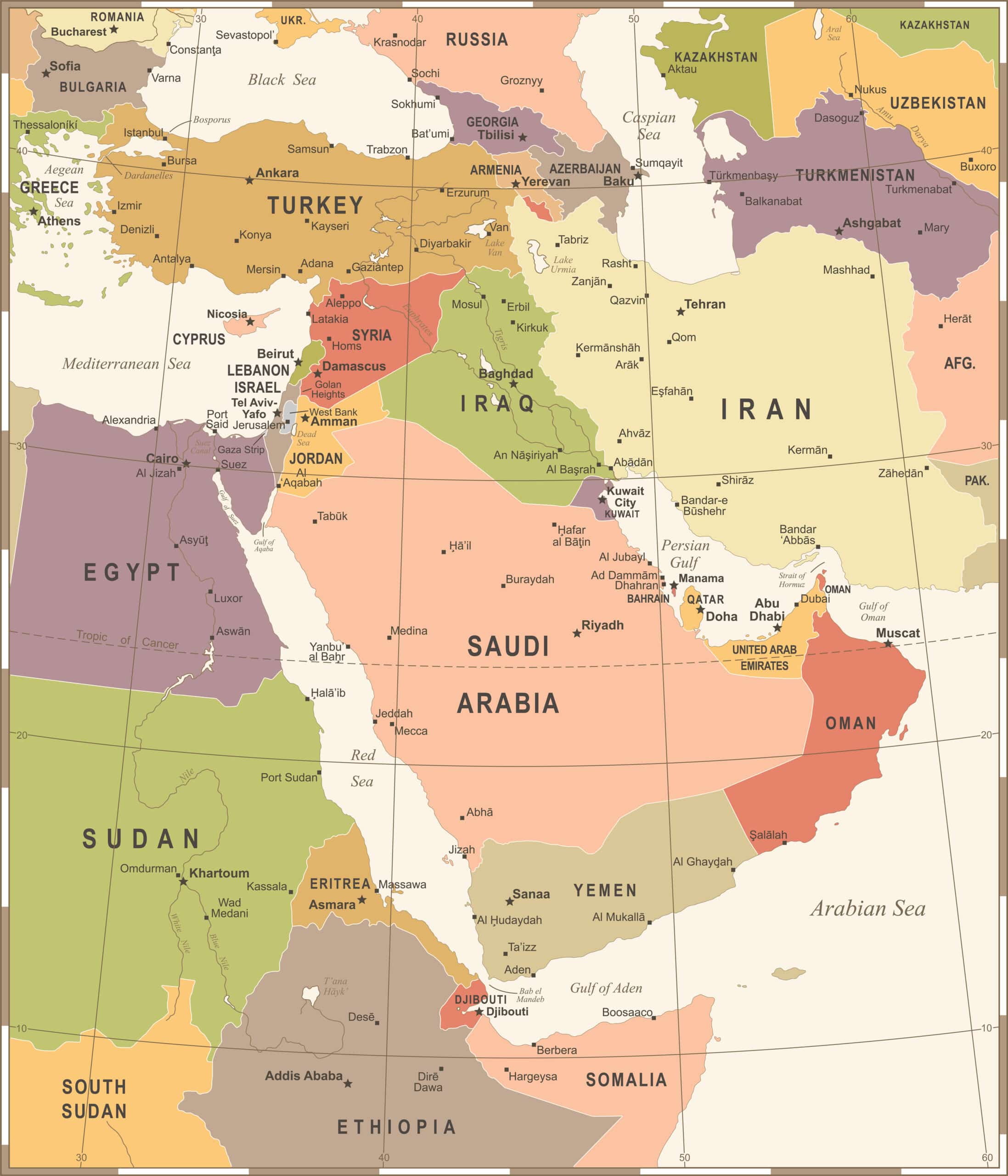
The Syrian government has consolidated control over north east Syria following its agreement with the Syrian Democratic Forces (SDF) on January 30, 2026. The arrangement, among other things, grants limited administrative autonomy to Kurdish-majority areas, and integrates the SDF into the Syrian army in the form of one division comprising three brigades deployed in the north east and a further brigade assigned to an Aleppo division responsible for Kobane. The deal also requires the departure of non-Syrian elements within the SDF/YPG, usually referred to as the Qandil cadres, and that has process has begun.
The SDF has since retreated to three Kurdish-majority areas – Hasakeh, Qamishli and Kobane. These areas will be administered by local officials but ultimately report into Damascus under the new command and governance structure.
The north east accounts for roughly one third of Syria’s territory and contains the majority of the country’s oil and gas fields, including assets that prior to 2011 produced approximately 380,000 barrels per day. By extending political, administrative and economic control over this region, Damascus now holds formal authority across almost the entirety of the country for the first time since territorial fragmentation began in 2012.
The January 30 agreement, reinforced by Al Sharaa’s decision to join the anti-ISIS coalition in November 2025, represents a major shift in Syria’s post-conflict order. It consolidates territorial authority, recentres security cooperation in Damascus and curtails the autonomous space that had emerged in the north east over the past decade.
The autonomous Kurdish administration established during the conflict represented the most substantive decentralisation experiment in modern Syrian history. Its reduction to limited administrative autonomy within a centralised framework, combined with the loss of its value to Washington, substantially degrades its influence inside Syria. The implications also extend further afield, complicating broader Kurdish aspirations across the region.
Alongside the political realignment, control of energy infrastructure provides the government with access to revenue streams critical to reconstruction and public sector financing. This is critical given the economy remains more than 60 per cent smaller than in 2011 and reconstruction needs are estimated in the hundreds of billions of dollars. Even at reduced production levels due to infrastructure degradation and sanctions constraints, hydrocarbons remain one of the few scalable economic levers available to Damascus.
The counter-ISIS file has now shifted decisively to Damascus. By joining the coalition during Al Sharaa’s White House visit and subsequent engagement with Washington, the Syrian government has positioned itself as the principal national partner in anti-ISIS operations. This displaces the SDF from its previous central role and materially reduces its strategic value to the US. Counterterrorism cooperation is now embedded within a state-centric framework rather than a semi-autonomous regional structure.
The agreement also advances a long-standing Turkish security objective. Ankara has consistently sought the removal of transnational Kurdish militant structures from its southern border. By mandating the exit of non-Syrian SDF/YPG personnel and recasting Kurdish formations as nationally integrated units, the deal narrows the ideological and operational space for cross-border Kurdish mobilisation. It reduces the prospect of an autonomous Kurdish corridor contiguous with Turkey.
Implementation of the January 30 agreement is likely to prove complex. Differing interpretations of command authority, resource control and administrative reporting lines are already evident, particularly in Kobane. The mechanics of integrating Kurdish-majority areas under local administration that reports into Damascus will test both political trust and institutional capacity.
Beyond implementation challenges, Syria’s political trajectory appears to be consolidating around centralised authority with limited pluralism. While some external stakeholders may prioritise stability over democratic transition, particularly given the failure of comparable democratic experiments elsewhere in the region, the governance model emerging is unlikely to be liberal. There are few indicators that Al Sharaa intends to institutionalise meaningful political competition or decentralised power-sharing.
The principal medium-term risk lies in institutional capacity. The Syrian state apparatus has been hollowed out by more than a decade of conflict, economic contraction and sustained sanctions pressure. If administrative and service-delivery mechanisms fail to absorb newly consolidated territories, then coercion may substitute for governance. That pattern would risk renewed unrest, particularly in areas with residual grievances.
External engagement will therefore require recalibration. Durable stability will depend less on the authority of the individual leader and more on the reconstruction of functioning institutions capable of delivering security, services and economic recovery. Support directed at administrative reform, fiscal management and local governance capacity may offer greater long-term returns than leader-centric diplomacy. The durability of the present settlement will hinge on whether the machinery of the state can be rebuilt behind the consolidation of power.


1 To Watch
Crackdowns on political opposition and public dissent are increasing the risk of instability in Jordan
May 22, 2025
1 To Watch
Donald Trump has an historic opportunity to negotiate a much tougher nuclear deal with Iran – will he seize it?
April 3, 2025
1 To Watch
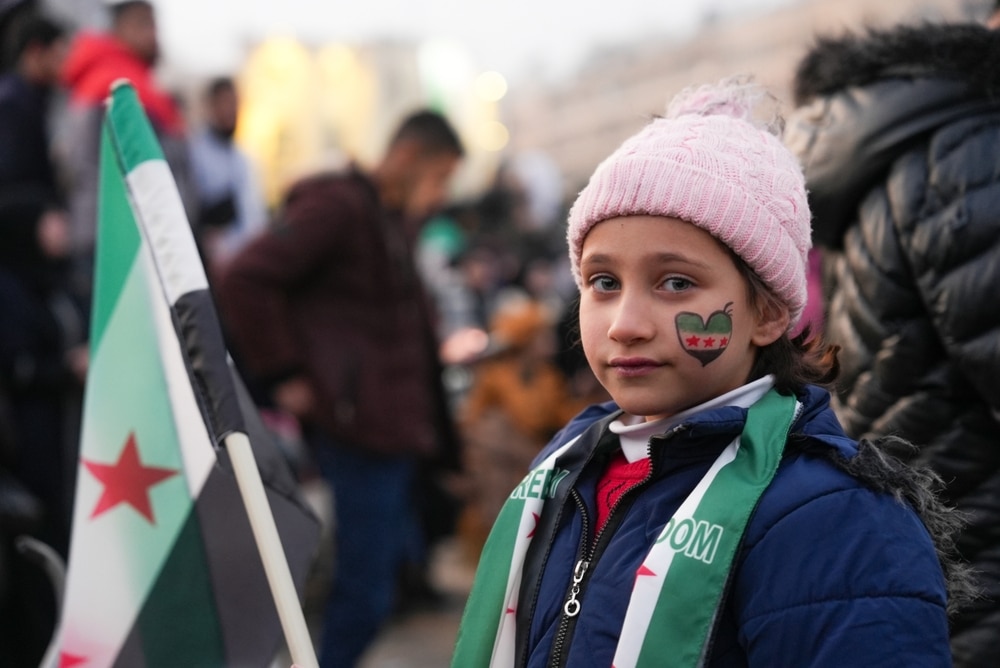
The transitional government must focus on four key areas to ensure that unity is maintained.
December 24, 2024
© Azure Strategy 2026.